
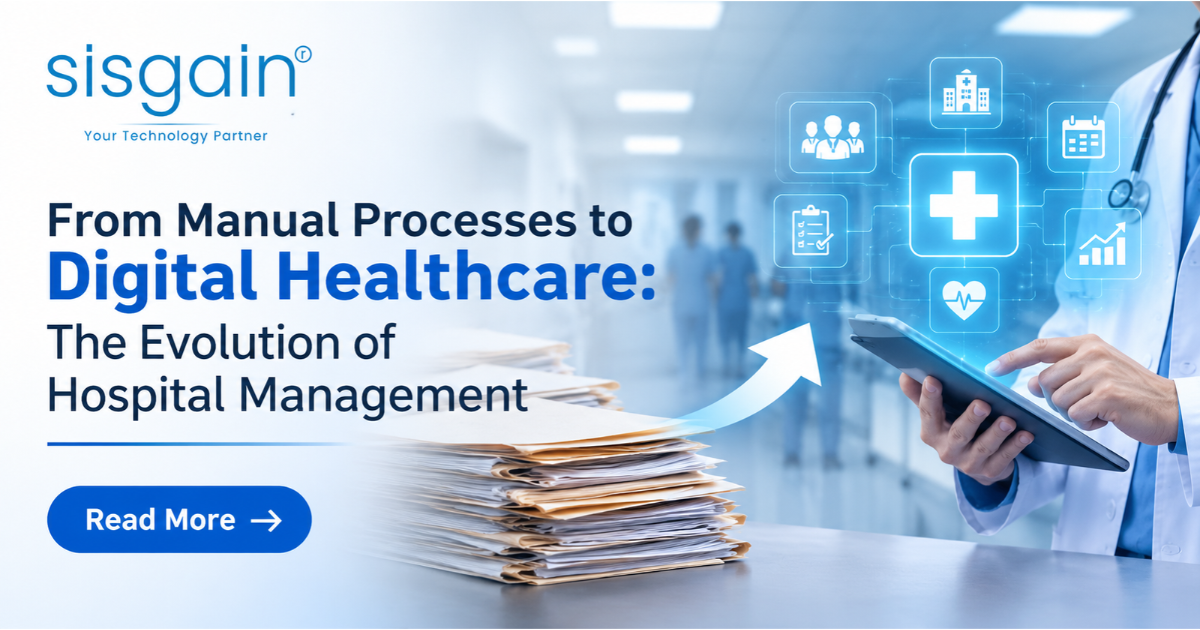
Not long ago, a hospital's daily rhythm depended on folders, clipboards, and telephone calls. Patient files sat in cabinets, prescriptions were handwritten, appointments were logged in paper registers, and every department kept its own records. Clinical and administrative teams worked hard, but the systems around them demanded constant manual coordination.
Today, healthcare organizations across the United States face rising patient volumes, tighter margins, and growing expectations for convenience, accuracy, and transparency. Digital healthcare transformation answers those pressures by connecting clinical, administrative, and financial operations so that information reaches the right people at the right time. Modern hospital platforms, automation, cloud computing, and artificial intelligence are changing how care is delivered and supported.
This article traces that journey, from paper-based administration to integrated digital platforms, and explains the technologies, benefits, challenges, and selection criteria that matter most. The central idea is simple: digital transformation is no longer just a technology upgrade. It is an operational necessity for modern healthcare organizations.
Read More - 5 Signs Your Business Needs a Custom ERP Software Solution
1. Understanding Traditional Hospital Management and Its Limitations
Before digital tools became widespread, hospitals ran on people, paper, and personal coordination. That approach worked when patient volumes were modest, but it grew harder to sustain as healthcare became more complex.
Paper-Based Patient Records and Documentation
Patient histories, prescriptions, laboratory reports, and discharge summaries lived in physical files. When a patient had been seen by several departments, retrieving a complete record could mean walking between offices and archives. Misplaced documents, duplicate files, and repeated manual data entry affected accuracy, while storing large volumes of sensitive paperwork securely became a growing burden.
Manual Appointment Scheduling and Patient Registration
Appointments were commonly booked by phone, at reception desks, or in handwritten registers. This invited double bookings, long waits, and registration delays. Receptionists and administrative staff carried a heavy workload, spending time on routine paperwork rather than on helping patients.
Disconnected Hospital Departments
Pharmacy, radiology, billing, laboratories, and patient administration often operated as separate islands. Sharing information required phone calls, printed forms, or personal follow-up. Fragmented workflows delayed treatment coordination and slowed administrative decisions.
Traditional hospital management depended heavily on human coordination, which made operational efficiency difficult to maintain as patient volumes increased.
2. Why Healthcare Organizations Are Moving Toward Digital Hospital Management
Across the United States, hospitals and healthcare networks are accelerating digital adoption. Several forces are driving that shift.
Increasing Patient Expectations
People now book flights, manage banking, and order groceries from their phones, and they expect similar convenience from healthcare. Easy appointment booking, digital communication, online access to records, and faster administrative services all influence patient satisfaction and the accessibility of a hospital.
Rising Administrative and Operational Complexity
Healthcare organizations manage enormous volumes of patient information, insurance documentation, billing activity, and departmental coordination. Manual workflows become harder to control as hospitals expand to new sites and services. Automation reduces repetitive administrative responsibilities and frees staff for higher-value work.
Demand for Better Data Accuracy and Transparency
Digital records give administrators access to current operational information. Centralized data supports reporting, resource allocation, and informed decision-making, while better visibility helps hospitals run more consistently from one department to the next.
Regulatory and Data Security Requirements in the USA
The Health Insurance Portability and Accountability Act (HIPAA) sets expectations for protecting sensitive patient information. Access controls, audit trails, encryption, secure storage, and appropriate information-sharing practices all matter. Any hospital adopting new technology must weigh privacy and compliance from the very first planning conversation.
3. The Evolution of Hospital Management Systems: From Basic Software to Integrated Digital Platforms
Hospital technology did not change overnight. Each stage solved limitations left by the one before it.
Early Hospital Information Systems
The first computer-based tools handled billing, patient registration, and basic recordkeeping. They reduced dependence on paper, yet most supported only specific functions. Isolated applications could not share data easily, so staff still re-entered information from one program to another.
Introduction of Electronic Health Records (EHRs)
Electronic health records changed how hospitals maintained patient information. Medical histories, prescriptions, clinical notes, test results, and treatment documentation moved into digital form. Unlike paper files, EHRs allow authorized professionals to access information quickly from different locations. Interoperability remained a challenge, however, when organizations used incompatible systems.
Integrated Hospital Management Platforms
Modern platforms connect patient registration, appointments, billing, pharmacy, laboratory management, inventory, and reporting in one environment. Centralized access and automated workflows help administrators monitor operations more effectively. Mature healthcare markets abroad followed a similar path, and the hospital management system uae landscape is one example of how integrated platforms have become central to national digital health ambitions.
Cloud-Based Hospital Management Solutions
Cloud infrastructure supports remote access, scalability, centralized updates, and reliable data availability. It also raises important questions about secure hosting, backup strategies, access management, and vendor responsibilities. Because privacy and security obligations remain with the healthcare organization, cloud adoption demands careful due diligence.
Hospital management technology has evolved from isolated administrative tools into interconnected platforms that support clinical and operational coordination.
4. Key Technologies Driving the Digital Transformation of Hospital Management
Several technologies are making modern hospital operations more connected, intelligent, and efficient.
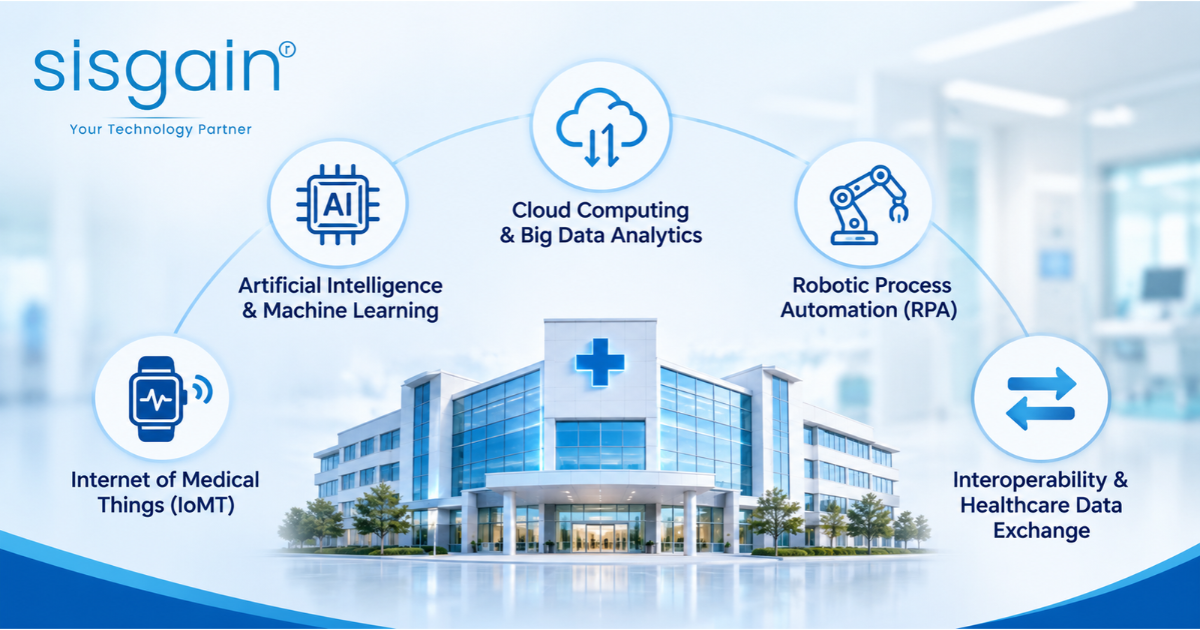
Artificial Intelligence and Machine Learning
AI can support administrative automation, scheduling recommendations, document processing, and operational forecasting. Machine learning models can help predict admission patterns, identify resource requirements, and support decision-making. It is important to distinguish administrative AI from tools used for clinical diagnosis or treatment. Clinical applications require appropriate validation, human oversight, and careful risk management.
Internet of Medical Things (IoMT)
Connected medical devices, monitoring equipment, and wearables collect health-related information continuously. IoMT can support remote patient monitoring and allow devices to communicate with hospital information systems. Device security and reliable data transmission are essential, since every connected device is a potential entry point for attackers.
Robotic Process Automation (RPA)
RPA can automate repetitive administrative tasks such as claims processing, data entry, appointment reminders, and document verification. This reduces manual workload and improves consistency. Even so, automated processes still need exception handling and human review to catch unusual cases.
Cloud Computing and Big Data Analytics
Cloud computing provides scalable infrastructure, while analytics tools help administrators examine patient flow, resource utilization, operational performance, and financial trends. The value of those insights depends on data quality and secure information management, so governance matters as much as technology.
Interoperability and Healthcare Data Exchange
Interoperability allows hospitals, laboratories, pharmacies, and external providers to share information. Standards such as HL7 and FHIR give systems a common language for exchanging data. Connected systems reduce information gaps and support better care coordination, particularly when patients move between organizations.
5. Essential Features of a Modern Digital Hospital Management System
A comprehensive platform is built from modules that each serve a distinct purpose while sharing a common data foundation. Healthcare buyers in international markets, including those researching hospital management software uae, tend to evaluate the same core capabilities listed below.
Patient Registration and Management
Digital registration creates a profile that holds demographic details and patient history. Centralized access means front-desk, clinical, and billing staff all work from the same accurate information.
Appointment and Doctor Scheduling
Online booking, physician availability management, and automated reminders reduce conflicts and no-shows. Scheduling updates reach everyone involved instantly.
Electronic Medical Records and EHR Integration
Digital clinical documentation, medical histories, and treatment records sit alongside integration with laboratory and diagnostic systems, giving clinicians a fuller picture of each patient.
Hospital Billing and Revenue Cycle Management
Automated billing workflows, insurance claims tracking, payment records, and financial reporting streamline the money side of healthcare. Strong revenue cycle management removes administrative bottlenecks and shortens payment delays.
Pharmacy, Laboratory, and Inventory Management
This module covers medication stock monitoring, laboratory test orders and results, and medical supply tracking with inventory alerts, helping prevent shortages and waste.
Reporting and Analytics Dashboard
Dashboards present operational performance, patient flow, resource utilization, and financial and administrative indicators in one view, so leaders can act on current information rather than outdated summaries.
6. How Digital Hospital Management Improves Healthcare Operations
Moving from manual processes to integrated systems produces practical, measurable benefits.
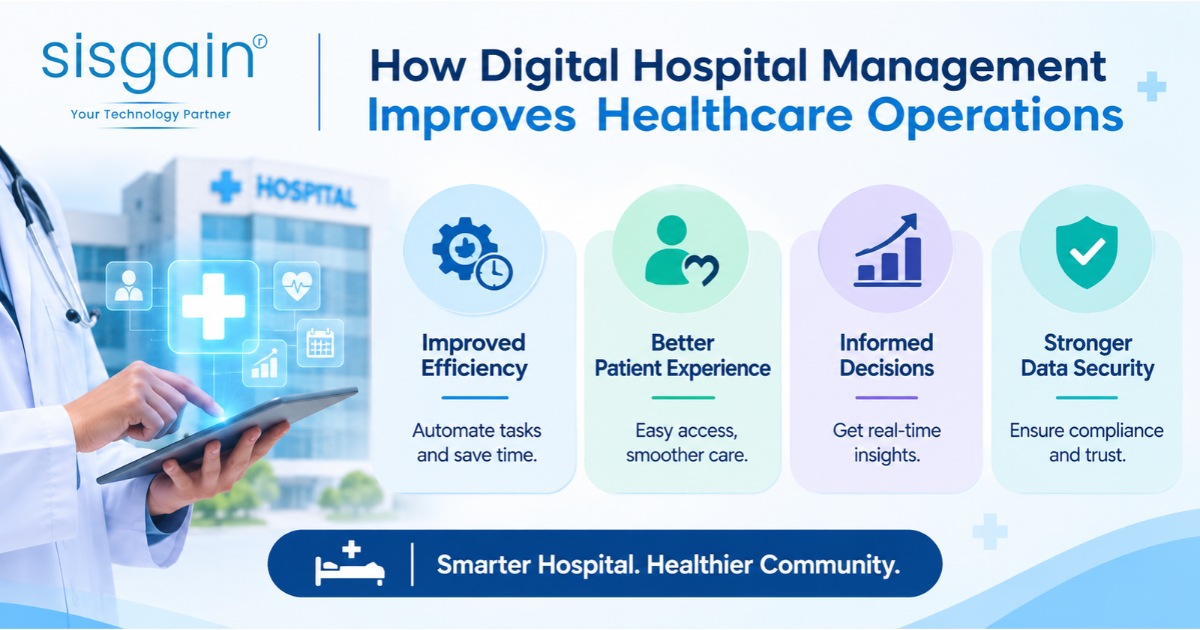
Improved Administrative Efficiency
Automation handles repetitive tasks, paper documentation declines, and information retrieval becomes faster. Departments coordinate with less friction.
Better Patient Experience
Convenient appointment management, clearer communication, and easier access to information reduce administrative delays and make each interaction smoother.
More Informed Hospital Decision-Making
Centralized operational data offers better visibility into performance and improves resource planning, from staffing to equipment.
Stronger Data Management and Accountability
Role-based access, activity tracking, and audit trails strengthen documentation and information governance, which supports both compliance and trust.
7. Challenges Hospitals Face When Adopting Digital Management Systems
Digital transformation is rewarding but not effortless. Organizations that plan for the obstacles below are far more likely to succeed. The same issues appear in regions such as the UAE, where buyers of hospital management software in uae report similar adoption hurdles.
Legacy System Integration
Older applications may not communicate easily with modern platforms. Data migration, system compatibility, and interoperability planning should begin early, before contracts are signed.
Data Privacy and Cybersecurity Risks
Patient information must be protected against unauthorized access, ransomware, breaches, and insecure connected devices. HIPAA-related safeguards and strong security governance are non-negotiable.
Staff Training and Change Management
Doctors, nurses, administrators, and support teams need practical training. Involving staff during implementation improves adoption and helps workflows fit real clinical routines.
Implementation Costs and Scalability
Licensing, infrastructure, integration, maintenance, and training all carry costs. Hospitals should evaluate long-term expenses, scalability, and expected operational value rather than focusing only on the initial investment.
8. The Future of Hospital Management: What Can Healthcare Organizations Expect?
The next generation of hospital management will be shaped by several emerging developments. Early adopters in innovation-focused hubs, including the hospital management system dubai market, offer a useful preview of where the industry is heading.
AI-Powered Administrative Workflows
Expect smarter document processing, resource forecasting, automated scheduling, and administrative decision support.
Predictive Hospital Operations
Historical and real-time data will help forecast patient demand, staffing requirements, bed availability, and inventory needs.
Connected and Interoperable Healthcare Ecosystems
Connected networks, standardized data exchange, and coordinated patient information will become the norm rather than the exception.
Patient-Centered Digital Healthcare
Patient portals, remote monitoring, digital communication, and easier access to services will keep placing patients at the center of the experience.
The future of hospital management will depend not simply on adopting more technology but on connecting systems, maintaining trustworthy data, and ensuring that digital workflows support healthcare professionals and patients.
9. Choosing the Right Digital Hospital Management Solution
Whether comparing local vendors or reviewing options such as hospital management software dubai providers for international perspective, decision-makers should apply consistent criteria:
- Scalability: Can the platform support rising patient volumes and additional departments?
- Customization: Can workflows adapt to the hospital's operational requirements?
- Integration: Does it interoperate with existing EHRs, laboratories, pharmacies, and billing applications?
- Security: Does it provide encryption, access controls, audit logging, and appropriate HIPAA safeguards?
- User Experience: Is the interface practical for doctors, nurses, administrators, and patients?
- Technical Support: Does the provider offer implementation help, training, maintenance, and ongoing support?
Ultimately, hospitals should select technology based on operational needs, security requirements, and long-term digital healthcare goals.
Conclusion
Healthcare has moved from paper files and handwritten registers to integrated digital platforms. EHRs, AI, automation, cloud infrastructure, and interoperability now work together to support operational efficiency, better information management, and patient-centered services. Yet successful transformation requires more than buying software. It depends on staff training, secure infrastructure, and thoughtful implementation. By embracing these principles, healthcare organizations across the United States can build connected, efficient, and technology-enabled hospitals ready for the future.
Frequently Asked Questions
Q1. What is a digital hospital management system?
It is centralized software that integrates administrative, clinical, and operational activities, including registration, scheduling, records, billing, pharmacy, and reporting, so departments share accurate information.
Q2. How has technology changed traditional hospital management?
Hospitals have shifted from paper records and manual scheduling to electronic records, automated workflows, and connected departments, which reduces errors and speeds up coordination.
Q3. What role does AI play in modern hospital management?
AI supports administrative automation, predictive analytics, scheduling, resource planning, and operational decision-making, always with human oversight for clinical uses.
Q4. What are the major benefits of hospital management software?
Benefits include improved administrative efficiency, centralized information, better coordination, streamlined billing, and a better patient experience.
Q5. What should hospitals consider before implementing a digital management system?
Consider scalability, integration, data security, HIPAA compliance, staff training, customization, and long-term maintenance and support.